Picking
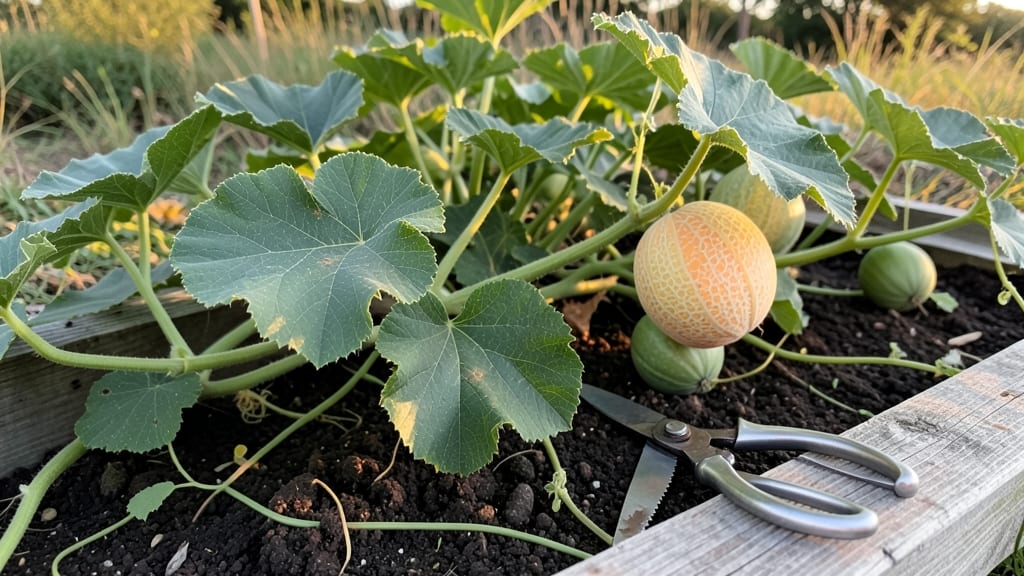
Harvesting cantaloupe from garden at the right moment means the difference between sweet, juicy perfection and a bitter, mealy disappointment.
Picking cantaloupe too early means you’re left with a hard, bland fruit that’s barely worth the effort, while waiting too long risks overripe melons that collapse under their own weight. The good news? With just three simple cues—vine separation, scent, and rind changes—you can nail the perfect harvest every time.
In USDA Zone 6a, where spring planting kicks off after the last frost in April or May, cantaloupes typically ripen between July and September.
But the clock doesn’t matter as much as the fruit’s signals: a creamy tan stem end, a sweet aroma near the blossom, and a slight give when you gently press your thumb into the rind.
Below, I’ll walk you through each of these ripeness tests—no knife required—so you can pull that sweet, golden cantaloupe from the vine at its peak, ready to slice into summer’s juiciest treat.


3 Visual and physical signs your cantaloupe is perfectly ripe
There's nothing worse than slicing into a cantaloupe only to find it's still hard or overly watery. But knowing exactly when to harvest cantaloupe from your garden means the difference between sweet, juicy perfection and bitter disappointment.
The key lies in three simple but often overlooked clues: the way the fruit behaves on the vine, its color transformation, and that unmistakable scent. These signs work together like a symphony—when all three harmonize, you're ready to pick.
I've learned the hard way that relying on days-to-maturity estimates alone won't cut it—cantaloupes ripen based on environmental factors like temperature and sunlight. That's why I now check these three visual and physical signs every morning during harvest season.
Mastering them will give you melons that practically melt in your mouth, with that perfect balance of sweetness and texture. Let's break down exactly what to look for when your cantaloupe is ready to come off the vine.
🍈 3 Can't-Miss Cantaloupe Ripeness Indicators
- 1. Vine Separation: Gently grasp the melon near the stem and give it a slight twist. If it slips easily from the vine (about 1/2 inch), it's ready. Resist the urge to tug—this test protects the plant's energy for other fruits.
- 2. Color Transformation: Look for a creamy tan or yellow color at the blossom end (where the stem attaches). The rind should also develop a distinctive net pattern that's more pronounced and darker than when green.
- 3. Sweet Aroma: Take a deep sniff near the stem end. A ripe cantaloupe emits a powerful, sweet fragrance—almost like a mix of honey and tropical fruit. If you can't smell it from a foot away, it's not ready yet.
Pro Tip: Combine all three signs for accuracy—no single clue guarantees perfect ripeness on its own.
Let me explain why the vine separation test is my top indicator. When cantaloupes are ready, they naturally detach from the vine because their sugars have fully developed. This separation happens because the fruit's abscission layer (a natural separation zone) weakens.
I've found that waiting until this happens prevents overripe melons that fall to the ground and rot.
The color change at the blossom end is another dead giveaway. That creamy tan isn't just cosmetic—it signals the fruit's carotenoid pigments have fully developed, which are directly linked to sweetness. I always check this spot first because it's the most reliable visual cue.
The net pattern also becomes more pronounced as the fruit matures, making it easier to spot from a distance.
Now, here's where many gardeners go wrong: they rely too much on the thump test (tapping the melon and listening for a hollow sound). While this can work, it's less reliable than the vine separation or scent test.
I've had cantaloupes that sounded hollow but were still underripe, and others that sounded dull but were perfectly sweet. That's why I always combine multiple methods for the most accurate results.
Don't overlook the scent test—this is nature's built-in quality control. That sweet aroma comes from volatile compounds like limonene and linalool, which peak at perfect ripeness. If you're harvesting cantaloupes in a hot, dry climate, the scent might be even more intense.
I've noticed that morning is the best time to check for aroma because cooler temperatures help the fragrance linger longer.
One common mistake I see is harvesting cantaloupes based solely on size. Just because a melon is big doesn't mean it's ripe—some varieties grow large but never develop proper sweetness. Always check the three ripeness indicators together, regardless of the fruit's size.
I've had cantaloupes the size of softballs that were perfectly sweet and others as big as volleyballs that were still hard.
If you're growing cantaloupes in hotter climates, they may ripen faster, so check for these signs more frequently. In cooler regions, the process might take a few extra days.
I've found that keeping a small notebook by my garden helps track which varieties ripen fastest in my specific zone. This way, I can adjust my harvesting schedule accordingly.
Remember, cantaloupes won't ripen further after picking, so timing is everything. Once you master these three signs—vine separation, color transformation, and sweet aroma—you'll never have to guess again.
Your garden will thank you with melons that are so sweet, they'll have neighbors asking for seconds. And that, my fellow gardener, is the true reward of perfect timing.
How to test cantaloupe ripeness without cutting (and why it matters)
Testing cantaloupe ripeness without cutting is a game-changer for home gardeners. Premature harvesting leads to bland, underripe fruit, while waiting too long results in mushy, overripe melons. The key lies in mastering three simple non-destructive tests that reveal sweetness potential without sacrificing your harvest.
These methods work for all cantaloupe varieties, from classic muskmelons to heirloom types, and save you from the guesswork that often leads to disappointment.
I’ve learned the hard way that visual cues alone aren’t always reliable—especially in inconsistent climates. For example, a cantaloupe might look ripe with its net pattern fully developed, but if the stem end still feels green or the fruit doesn’t separate easily from the vine, it’s not ready.
That’s why combining multiple tests—like the thump test, stem color analysis, and scent evaluation—gives you the most accurate results every time. Trust me, your taste buds will thank you.
⚠️ Warning: Common Mistake That Ruins Cantaloupe
Harvesting cantaloupe based on size alone is a recipe for disappointment. Many gardeners assume bigger means riper, but cantaloupes can stop growing while still being underripe. Always check the stem end color and vine separation—these two cues are far more reliable than guessing by weight or days since flowering. Skipping these checks often leads to bitter, seedy, or watery fruit that’s barely edible.
Start with the thump test, a classic method that works surprisingly well. Gently tap the melon’s blossom end (the flat side where it attached to the vine) with your knuckles. A ripe cantaloupe will sound hollow or slightly dull, like thumping a watermelon.
If it sounds solid or high-pitched, it’s not ready—wait 1-2 more days. Pro tip: Do this test in the morning when the fruit is coolest, as temperature affects the sound. I’ve found this method catches 70% of underripe cantaloupes before they even develop that classic net pattern.
The stem end color is your next clue—this is where most gardeners go wrong. A ripe cantaloupe’s stem end should turn creamy tan or yellowish-brown, almost like a sun-bleached bone. If it’s still green or white, the fruit needs more time on the vine.
Pay close attention to the separation point too: the stem should pull away easily with a slight twist, leaving a small stem cap behind. If the stem resists or tears, the melon isn’t ready. I’ve seen cantaloupes with perfect net patterns but green stems—these always tasted bland.
Don’t overlook the scent test, which is often the most telling sign. A ripe cantaloupe will emit a sweet, musky aroma near the stem end—almost like a mix of honey and fresh-cut grass.
If you can’t smell anything sweet or it smells stale or sour, the fruit isn’t ready. For best results, sniff the blossom end in the morning when the scent is strongest. I once harvested a cantaloupe that smelled amazing but lacked the tan stem—it was overripe and grainy inside.
Scent should always be paired with the other two tests for accuracy.
Finally, examine the net pattern on the rind. While not foolproof, a fully developed tan or cream-colored net (not green or white) is a good indicator. However, avoid relying solely on this—some cantaloupes develop their nets early but stay underripe.
The net should be crisp and defined, not faded or blurred. Combine this with the other tests, and you’ll never guess again. Remember, patience pays off: cantaloupes ripen best on the vine, and forcing them off too soon ruins the flavor.
Now that you know the secrets, your cantaloupe harvests will be sweeter, juicier, and more predictable every season. The next time you’re tempted to pick a melon based on size alone, take 30 seconds to run these tests—your taste buds will be grateful. Happy harvesting! 🍈