
Pruning
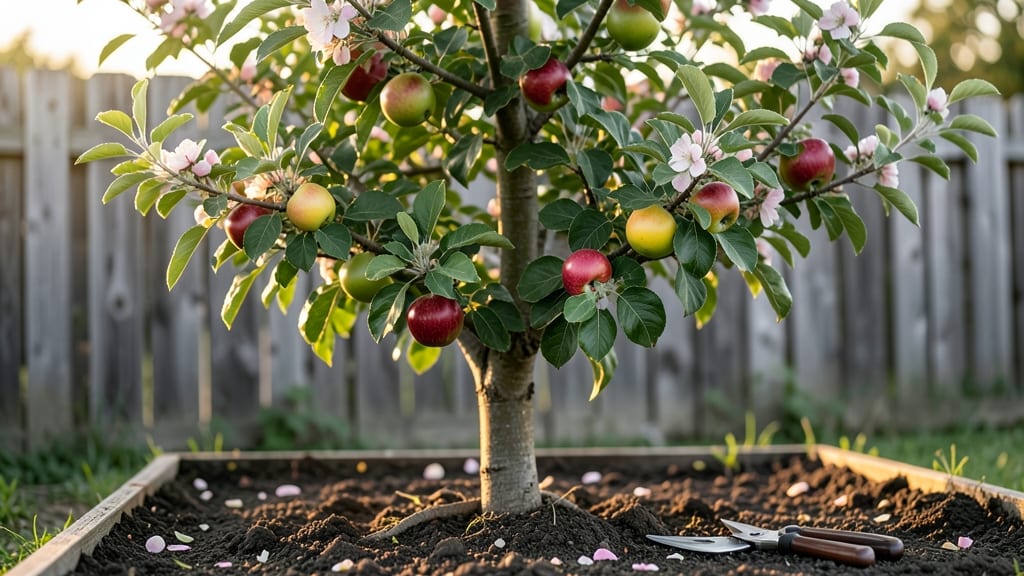
Apple tree gardening starts with decades of harvests if you nail the early steps—like I did when I planted my first tree last spring. put it, how you prep the soil, and when you prune.
The payoff isn't just fruit—it's the way a healthy tree fills your yard with spring blossoms and autumn color.
Start with a sunny spot where the tree gets at least 6 hours of sunlight daily, and dig a hole twice as wide as the root ball but no deeper. Amend the native soil with compost—apple trees hate soggy feet but love rich, well-draining dirt.
My first mistake was rushing the planting; give roots time to settle before watering deeply. A 5-gallon tree needs about 10 gallons of water after planting, and mulch keeps moisture steady.
Pruning in late winter shapes the tree for better airflow and fruit production. Cut back dead or crossing branches first, then thin out crowded growth to let light reach the center.
By summer, you'll see new shoots forming where you made those cuts—and that's when you know you're on the right track. The first harvest might take 3-5 years, but the care you put in now ensures strong branches and disease resistance.
Pests and diseases are the real test, but a few simple checks keep trees healthy. Spray for aphids in spring, watch for apple scab on leaves, and thin fruit when it's the size of a quarter to avoid overburdening branches.
My tree's biggest threat turned out to be deer—so I wrapped the trunk in wire mesh until it outgrew their interest. With consistent care, you'll end up with a tree that feeds you, feeds wildlife, and becomes the centerpiece of your yard.
📚 In This Guide
- What you need
- Instructions
- Tips and common mistakes
- Wrapping up and next steps
What you need
- ● Pruning shears: Bypass pruners (sharp, 6–8" blades) for small branches.
- ● Loppers: 12–18" long for medium branches (replace dull blades yearly).
- ● Pruning saw: Curved-tooth saw for thick branches (20–24" length).
- ● Gloves: Heavy-duty, cut-resistant gloves (e.g., leather or synthetic mesh).
- ● Disinfectant: 70% isopropyl alcohol or 10% bleach solution (1 part bleach to 9 parts water) to sterilize tools.
- ○ Pruning sealant: Optional but helpful for large cuts (e.g., tree wound paint).
- ● Ladder or step stool: Sturdy, extendable ladder (20+ ft for tall trees).
- ● Tarp or drop cloth: To catch debris during cleanup.
- ● Pole pruner: For high branches (extendable up to 20 ft).
- ● Tree pruning rope: For supporting heavy branches during pruning.
- ● Hand saw: For fine-tuning cuts on smaller branches.
- ● Pruning guide: A ruler or measuring tape to ensure proper branch removal angles.
- ● Safety gear: Goggles, long sleeves, and closed-toe shoes to protect from debris.
- ● Knowledge of basic pruning: Familiarize yourself with tree anatomy (leader, scaffold branches, suckers).
- ● Weather check: Prune on a dry, calm day (avoid frost or rain within 24 hours).
- ● Tree health assessment: Inspect for pests/diseases before pruning (e.g., signs of apple scab or borers).
Step-by-step year-round care for healthy apple trees
Here’s how to keep your apple trees thriving through every season—so they reward you with abundant fruit.
Plant in the Right Location and Soil
Choose a sunny spot with at least 6 hours of direct sunlight daily. Apple trees need room to grow, so space them 20-25 feet apart for proper airflow and sunlight penetration. Dig a hole twice as wide as the root ball but no deeper—this encourages roots to spread outward rather than circling tightly.
Amend the native soil with 3 inches of compost mixed into the top 12 inches of the planting hole. Apple trees prefer slightly acidic to neutral soil (pH 6.0-7.0). If your soil is heavy clay, add 2 inches of coarse sand to improve drainage. Water the tree deeply before planting to help settle the soil around the roots.
Prune for Structure in Early Spring
Prune your apple tree in late winter or early spring, just as buds begin to swell. Remove any dead, diseased, or crossing branches first—these compete for energy and can harbor pests. Cut back to an outward-facing bud or branch to encourage an open canopy, which improves airflow and reduces disease risk.
Thin out excess branches to let sunlight reach the center of the tree. Aim for a central leader (main upward-growing branch) with well-spaced side branches. Avoid heavy pruning in fall, as it stimulates new growth that won’t harden off before winter. After pruning, apply dormant oil spray to protect against overwintering pests.
Water Deeply and Mulch in the First Year
Water your apple tree deeply once a week during the first growing season, ensuring moisture reaches 12-18 inches down. Shallow watering encourages weak root systems. Check soil moisture by sticking your finger 2 inches deep—if it’s dry, water again. Avoid wetting the leaves or fruit to prevent fungal diseases like apple scab.
Spread 3 inches of organic mulch (like wood chips or straw) around the base, keeping it 6 inches away from the trunk to prevent rot. Mulch retains moisture, regulates soil temperature, and suppresses weeds. Replenish mulch annually in early spring to maintain its protective layer.
Fertilize and Monitor for Pests in Summer
Apply a balanced fertilizer (10-10-10) in early spring and again in mid-summer, following package instructions. Over-fertilizing can lead to excessive leaf growth at the expense of fruit development. Look for signs of pests like aphids, codling moths, or apple maggots—treat infestations early with neem oil or insecticidal soap for organic control.
Thin fruit when it’s the size of a quarter to improve size and quality. Remove excess fruit clusters, leaving 6-8 inches between remaining apples on the branch. This reduces competition for nutrients and encourages larger, healthier fruit. Harvest apples when they easily detach from the tree with a gentle twist.
Prepare for Winter and Prune Again in Late Fall
In late fall, prune again to remove any suckers (shoots growing from the base) and waterlogged branches. Apply 2-3 inches of mulch around the base to insulate roots from freezing temperatures. Wrap the trunk of young trees with tree wrap to protect against sunscald and rodent damage.
Apple trees enter dormancy in winter, but they still need care. Check for winter burn (brown edges on leaves) in early spring—a sign of dehydration. If you notice it, water lightly in late winter to rehydrate the roots. With consistent care, your tree will reward you with healthy growth and bountiful harvests for years to come.
Tips & tricks for perfect apple tree gardening
Took me years to figure out these essential tricks that make all the difference between a struggling apple tree and one that thrives. Here's what nobody tells you—
The Location Factor: That 6 hours of sunlight isn't just a minimum—it's the absolute baseline for healthy fruit production. I've seen trees in partial shade produce tiny, sour apples because they lack the energy for proper ripening. If your yard only gets 4-5 hours, consider planting in a container where you can move it to sunnier spots during winter months when days are shorter. The 20-25 foot spacing isn't just about giving roots room—it's about preventing fungal diseases that spread through crowded canopies.
Soil Preparation Secret: The 3 inches of compost and 12 inches of soil amendment might seem like overkill, but this creates the perfect root zone. I learned this the hard way after planting in unamended soil—my tree struggled for years. For clay-heavy soils, that 2 inches of coarse sand makes all the difference in preventing waterlogging. Pro tip: test your soil's pH before planting. Most garden centers sell inexpensive test kits, and adjusting pH with lime or sulfur can prevent nutrient deficiencies before they start.
Pruning Precision: When pruning in late winter/early spring, look for branches that grow inward or cross each other—these are the first to remove. I used to cut randomly, and my trees developed weak structures. The central leader should be about 2/3 the height of the tree, with side branches spaced 12-18 inches apart. After pruning, that dormant oil spray isn't optional—it's your first line of defense against overwintering pests like scale insects. Apply it when buds are still dormant but before they swell.
Watering Wisdom: The once-a-week deep watering is critical, but timing matters just as much. Water in the morning so leaves have time to dry before evening—this prevents fungal diseases like apple scab. That 2-inch soil moisture check is your best friend. If you're using a drip irrigation system, place emitters at the tree's drip line (edge of the canopy) rather than at the trunk. This encourages roots to spread outward where they can access nutrients more efficiently.
Pro Tips for Apple Tree Gardening
- Took me years to figure out these essential tricks that make all the difference between a struggling apple tree and one that thrives.
- The Location Factor: That 6 hours of sunlight isn't just a minimum—it's the absolute baseline for healthy fruit production.
- Soil Preparation Secret: The 3 inches of compost and 12 inches of soil amendment might seem like overkill, but this creates the perfect root zone.
Frequently asked questions
Got questions about growing your own apple tree? You’re not alone!
Here are some of the most common concerns—plus quick, actionable answers to keep your tree thriving and fruiting for years.
When is the best time to plant an apple tree?
The ideal time to plant an apple tree is in early spring (just as buds swell but before leaves emerge) or in fall (about 6–8 weeks before your first hard frost). This gives roots time to establish before extreme temperatures. Avoid planting in summer heat or freezing winter months.
How often should I prune my apple tree?
Prune young trees annually in late winter or early spring to shape them and remove dead/diseased branches. Mature trees need pruning every 2–3 years, focusing on thinning out crowded branches and improving airflow. Pro tip: Use sharp, clean tools and sterilize them with rubbing alcohol between cuts to prevent disease!
Why isn’t my apple tree producing fruit?
Common reasons include lack of pollination (plant two compatible varieties), over-pruning (leave enough branches for fruit), or young age (dwarf trees fruit in 2–3 years; standard trees take 5–7 years). Check for pests/diseases too—aphids or fire blight can stress the tree.
Can I grow an apple tree in a container?
Yes! Dwarf varieties (like ‘Columnar’ or ‘Semi-Dwarf’) thrive in large containers (15+ gallons) with well-draining soil. Place them in full sun and water deeply when the top inch of soil dries. Move pots indoors during winter if temps drop below 20°F. Warning: Container trees may need more frequent pruning to control size.
How do I prevent apple tree pests naturally?
Start with cultural care: Prune for airflow, remove fallen fruit (to deter codling moths), and mulch to retain moisture. For pests like aphids or mites, spray with neem oil or introduce beneficial insects (ladybugs!). Avoid chemical sprays during bloom to protect pollinators.
Do apple trees need winter protection?
Young trees or tender varieties may need wrapping (burlap or tree wrap) to prevent sunscald and frost cracks. Water deeply before winter to reduce freeze damage, and mulch the base with 4–6 inches of organic mulch (like straw). Avoid heavy snow buildup—gently brush it off branches.
Wrapping up and next steps
Growing a thriving apple tree is a rewarding journey that blends patience, care, and a little know-how! 🌱 By mastering year-round pruning, understanding your tree’s needs, and staying proactive with maintenance, you’ll set the stage for a bountiful harvest.
Remember, every cut is a step toward stronger growth and sweeter fruit—so don’t hesitate to roll up your sleeves and get started!
Ready to take the next step? Start small:
- 📅 Mark your calendar for seasonal pruning tasks.
- 🛠️ Gather your tools and practice on a few branches.
- 🌳 Observe your tree’s progress and adjust as needed.