Trees
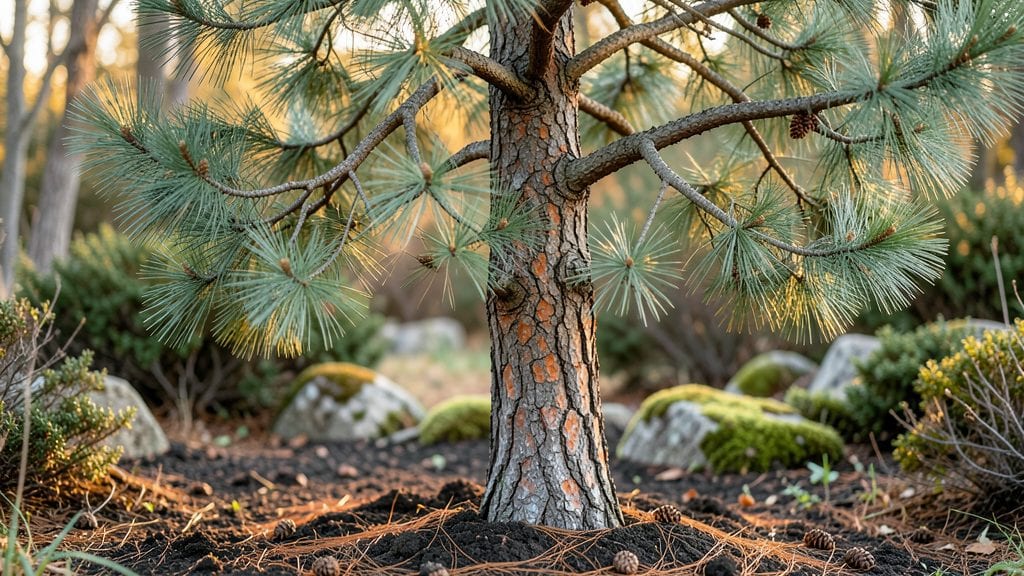
Garden pine trees add instant drama to any landscape, and the right species can grow 3-5 feet per year—faster than most people expect. 🌲 I planted my first dwarf pine five years ago, and it’s now taller than me, proving that patience pays off with these evergreen stars.
Their year-round color and texture make them the ultimate low-maintenance focal point, whether you’re filling a shady corner or creating a windbreak.
The secret to their speed lies in matching the right pine to your space: Mugo pines stay compact, Scots pines reach for the sky, and Japanese black pines offer dramatic branching.
All thrive in well-draining soil and full sun, though some tolerate partial shade. My biggest mistake? Overwatering—pines hate soggy roots, so let the top inch dry out between waterings once established.
With proper spacing (6–10 feet apart for larger varieties), you’ll avoid overcrowding and create a lush, layered look. Prune only to shape, never to encourage growth—these trees grow fast enough on their own.
In just a few years, your garden will have that textured, forest-like feel without the upkeep of flowering shrubs.
Even in small yards, dwarf varieties fit perfectly. The key is choosing a species that matches your climate and space—then stepping back and letting nature do the work. Ready to add some evergreen elegance that grows with you?
📚 In This Guide
- What you need
- Instructions
- Tips and common mistakes
- Wrapping up and next steps
What you need
- ● Pine tree seedlings or saplings: 1–3 fast-growing varieties (e.g., Pinus taeda [Loblolly], Pinus elliottii [Slash], or Pinus strobus [White Pine]). Check local nurseries for disease-resistant or climate-matched options.
- ● Well-draining soil: Mix 50% native soil + 30% sand + 20% compost (for sandy or clay-heavy soils). pH 4.5–6.0 (acidic—test with a soil pH kit).
- ● Planting hole: 2–3x wider than the root ball, no deeper than the container’s base.
- ● Mulch: 3–4 inches of pine bark or wood chips (keep 6 inches away from the trunk).
- ● Watering supplies: Garden hose with soaker hose attachment or drip irrigation.
- ● Hand trowel or spade (for digging).
- ● Garden gloves (to protect from sap and sharp roots).
- ● Pruners or loppers (sterilized with rubbing alcohol).
- ● Measuring tape (for spacing—6–10 feet apart for mature trees).
- ● Wheelbarrow (for mixing soil amendments).
- ● Fertilizer: Slow-release pine-specific fertilizer (apply in early spring).
- ● Erosion control fabric (for sloped or windy areas).
- ● Tree stakes & ties (for young saplings in high-wind zones).
- ● Soil aerator (if compacted soil is an issue).
- ● Pine tree companion plants: Lavender, heather, or ferns (thrive in acidic soil).
Step-by-step instructions for planting and growing pine trees in your garden
Here’s how to get your pines off to a strong start—fast growth begins with the right prep.
🌱 Step 1: Choose the Right Pine Species and Location
Pines thrive in well-draining soil with full sun—at least 6 hours daily. For fast growth, select species like Loblolly, Shortleaf, or Virginia Pine, which adapt well to most climates. Avoid low-lying areas where water pools; pines hate soggy roots. I always check the USDA hardiness zone map to match the pine’s zone with my garden’s conditions.
Dig a hole twice as wide as the root ball but only as deep. This encourages roots to spread outward instead of circling, which stunts growth. If your soil is heavy clay, mix in 2-3 inches of coarse sand at the bottom of the hole to improve drainage. The goal is to mimic the pine’s natural, airy root environment.
🪴 Step 2: Plant at the Correct Depth and Stake for Support
Place the pine in the hole so the root flare (where roots meet the trunk) sits 1-2 inches above ground level. Burying it too deep suffocates the roots and causes rot. Backfill with native soil, tamping lightly every 4-6 inches to remove air pockets. Water deeply to settle the soil around the roots.
Stake only if needed—young pines with thin trunks (under 2 inches) benefit from a single 4-6 foot stake tied loosely with soft fabric. Too-tight ties strangle the trunk as it grows. I use a figure-eight loop to allow trunk movement while providing support. Mulch with 2-3 inches of pine needles or wood chips (keep it 6 inches away from the trunk to prevent rot).
☀️ Step 3: Water Deeply and Adjust Care for Fast Growth
Water deeply 2-3 times per week for the first year, ensuring moisture reaches 12-18 inches down. Pines hate drought stress, which slows growth and makes them vulnerable to pests. You’ll know you’re doing it right when the soil feels damp 6 inches deep—not soggy, not dry. Use a soaker hose to water slowly at the base and avoid wetting the needles.
Fertilize lightly in early spring with a balanced 10-10-10 formula (follow label rates). Over-fertilizing burns roots and causes weak, spindly growth. I skip fertilizer after the first year unless the tree looks nutrient-deficient—yellowing needles or stunted growth. Prune only to remove dead or crossing branches in late winter; never "top" a pine, as it encourages weak, disease-prone growth.
⏰ Step 4: Monitor for Pests and Adjust Seasonal Care
Check for pine bark beetles or sawfly larvae every 2-3 weeks in summer. Early signs include yellowing needles or sawdust-like frass on branches. If you spot pests, spray with neem oil (mix 1 tablespoon per gallon of water) or introduce parasitic wasps for natural control. Healthy pines rarely have pest issues, so proper watering and spacing prevent most problems.
In winter, protect young pines from dehydrating winds by wrapping the base with burlap if your climate gets harsh. Mature pines handle cold well, but newly planted ones benefit from a 2-3 inch layer of mulch to insulate roots. Avoid heavy pruning in winter—it stresses the tree when it’s already conserving energy. Instead, focus on removing only dead branches to keep the canopy open for airflow.
Tips & tricks for fast-growing garden pine trees
Fast growth starts with the right approach—and avoiding these common mistakes will help your pines thrive from day one.
Soil Prep Secret: Before planting, test your soil's drainage by digging a small hole and filling it with water. If it doesn't drain completely within an hour, you definitely need that 2-3 inches of coarse sand at the bottom. I learned this the hard way after watching a pine struggle in heavy clay—roots need oxygen as much as water! For even faster growth, mix in a handful of compost when backfilling the hole to give those roots a nutrient boost right away.
Staking Strategy: If you're staking, use a stake that's at least 2-3 times taller than your pine's current height. The stake should extend above the tree to provide leverage against wind. I tie it loosely with soft fabric and check the knot every couple of weeks—too-tight ties can actually strangle the trunk as it grows. Remember, the goal is support, not restraint.
Watering Wisdom: That 2-3 times per week watering schedule works best when you're really soaking the roots. Use your finger to check moisture 6 inches down—it should feel damp but not soggy. I set a timer for 20-30 minutes when using a soaker hose to ensure deep watering. Early morning is ideal because it gives the roots time to absorb moisture before the heat of the day. Avoid wetting the needles to prevent fungal issues.
Fertilizer Timing: When you fertilize in early spring, use half the recommended rate of that 10-10-10 formula. Pines are sensitive to excess nitrogen, which causes weak, spindly growth. I spread the fertilizer in a circle about 2 feet from the trunk and water it in well. After the first year, only fertilize if you notice yellowing needles or stunted growth—healthy pines rarely need extra nutrients once established.
Pro Tips for Garden Pine Trees
- Fast growth starts with the right approach—and avoiding these common mistakes will help your pines thrive from day one.
- Soil Prep Secret: Before planting, test your soil's drainage by digging a small hole and filling it with water.
- Staking Strategy: If you're staking, use a stake that's at least 2-3 times taller than your pine's current height.
Frequently asked questions
Got questions about growing garden pine trees? You’re not alone! Here are some of the most common concerns—plus quick, practical answers to help you nurture a thriving pine in your yard.
How fast do garden pine trees grow?
Most garden pine species grow slowly—typically 6 to 24 inches per year, depending on the variety. Fastest growers (like Pinus strobus or Pinus taeda) may reach 12 inches annually with ideal conditions: full sun, well-draining soil, and consistent moisture. Patience is key for mature height and full foliage!
When is the best time to plant a pine tree?
Plant pines in early spring or fall when temperatures are mild (50–70°F). Avoid summer heat or winter frosts, which stress young roots. Bare-root pines can go in anytime, but container-grown trees thrive best with a few weeks to establish before extreme weather. Pro tip: Water deeply after planting to eliminate air pockets!
Can I grow a pine tree in a pot instead of the ground?
Yes! Dwarf varieties (like Pinus mugo) thrive in large containers (15+ gallons) with drainage holes. Use lightweight potting mix and repot every 2–3 years. For larger pines, a pot isn’t ideal—their roots need depth and space to prevent root-bound stress. Warning: Potted pines dry out faster; check soil moisture weekly!
Why are my pine needles turning brown?
Brown needles usually signal overwatering, underwatering, or pests. Check soil moisture—pines hate soggy roots but need consistent hydration. Look for spider mites or needle cast fungus (yellow/brown patches). Prune affected branches and treat with neem oil if needed. Quick fix: Improve airflow around the tree!
Do pine trees need pruning? If so, when?
Prune pines once a year in late winter or early spring (before new growth) to remove dead branches or shape the tree. Avoid heavy pruning—pines grow in whorls, and over-trimming can stunt growth. Use clean, sharp tools to prevent disease. Focus on: Deadwood, crossing branches, and lower limbs crowding the base.
Wrapping up and next steps
Growing garden pine trees is a rewarding journey that brings timeless beauty and texture to your outdoor space. Whether you’re aiming for fast growth or simply love their evergreen charm, the key lies in choosing the right variety, providing proper care, and staying patient—nature’s best work takes time! 🌲✨
Ready to transform your garden? Start by selecting a healthy sapling (or seeds!) and put your newfound knowledge into action. Before you know it, you’ll be enjoying the fresh scent of pine and the pride of nurturing a thriving tree. Happy planting!