Planting
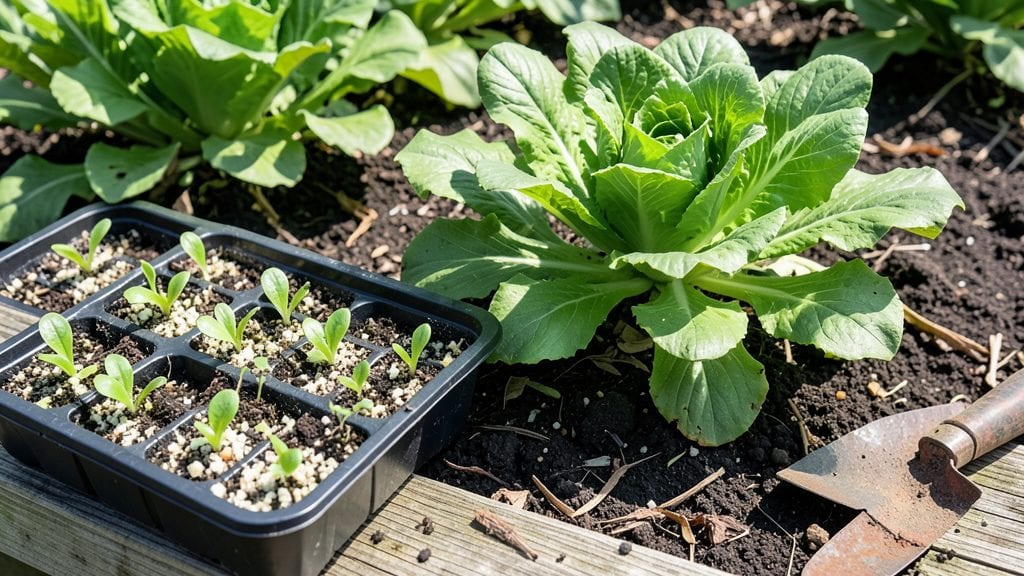
Garden row spacing directly impacts plant health and harvest size by controlling competition for resources and maximizing exposure to sunlight. Most vegetables require 12–36 inches between rows, while herbs and leafy greens do best with 6–18 inches of separation.
Getting the spacing right isn't just about fitting more plants—it's about creating an ecosystem where each plant gets what it needs to thrive. 🌱 For example, tall plants like corn or sunflowers need 18–24 inches between rows to avoid shading smaller neighbors, while bush beans can handle 12 inches because they mature quickly.
I've found that even a few extra inches can mean the difference between a bountiful harvest and stunted growth, especially in dense vegetable gardens.
Another key factor is your garden's layout. Raised beds often allow for tighter spacing since soil quality is more consistent, while traditional in-ground rows might need extra room for tools to maneuver. For container gardens, spacing becomes even more critical—crowded roots can't expand, leading to poor drainage and disease.
Always check seed packets for mature plant size, as dwarf varieties can sometimes be planted closer together than their full-size counterparts.
💡 In This Article
- How Plant Mature Size Determines Row Spacing Needs
- Adjusting Spacing for Different Garden Layouts and Plant Types
How plant mature size determines row spacing needs
The mature size of a plant is the single most critical factor in determining row spacing because it directly impacts three key resources: sunlight, water, and nutrients.
Plants with broad canopies like tomatoes or squash need 24–36 inches between rows to prevent shading smaller plants below, while their roots compete aggressively for nutrients in a 12-inch-deep soil zone.
The larger the plant's foliage, the more space it requires to intercept sunlight—corn, for example, can grow 8–10 feet tall and needs 18–24 inches between rows to avoid mutual shading that reduces photosynthesis by up to 30%. 🌿
Root systems play an equally vital role. Deep-rooted plants like carrots or asparagus need 12–18 inches between rows to prevent root competition, where plants steal nutrients and water from each other.
Shallow-rooted herbs like basil or thyme, however, can thrive in 6–12 inches because their roots don't extend far below the surface.
The science here involves soil volume—each plant needs enough space to access 1 cubic foot of soil for optimal growth, which translates to roughly 12 inches of row spacing for medium-sized vegetables.
Airflow is another critical factor tied to mature plant size. Tall, dense plants like sunflowers or broccoli create microclimates where humidity builds up, increasing the risk of fungal diseases like powdery mildew.
Proper spacing—typically 18–24 inches for these crops—allows air to circulate, reducing moisture retention on leaves by up to 40%. This is why you'll often see wider spacing recommendations for plants prone to disease, even if their mature size suggests tighter spacing would suffice. 🌬️
Consider these common examples to visualize how mature size dictates spacing:
- Corn: 18–24 inches between rows (mature height: 8–10 feet)
- Tomatoes: 24–36 inches (vining types) or 18–24 inches (bush types)
- Lettuce: 6–12 inches (mature height: 6–12 inches)
- Beans: 12 inches (bush types) or 18 inches (pole types)
- Carrots: 12–16 inches (prevents root crowding)
What most gardeners overlook is how spacing affects the plant's ability to develop its full genetic potential. For instance, a tomato plant given only 12 inches of row spacing might produce 30% fewer fruits than one with 24 inches, not because of the extra space itself, but because it can't compete for sunlight or nutrients. The same principle applies to herbs—basil plants spaced 6 inches apart will grow bushier and more flavorful than those crammed into 3 inches, where they compete for light and become leggy. 🌱
Pro tip: Always measure spacing from the center of one plant to the center of the next, not from the edge of the plant. This ensures roots and canopies don't overlap, even as plants mature.
For example, if your seed packet recommends 18 inches between tomato plants, that's the distance from the center of one plant to the center of the next—not from the stem to the next stem.
This small detail can mean the difference between a thriving garden and one plagued by disease and poor yields.