Pests
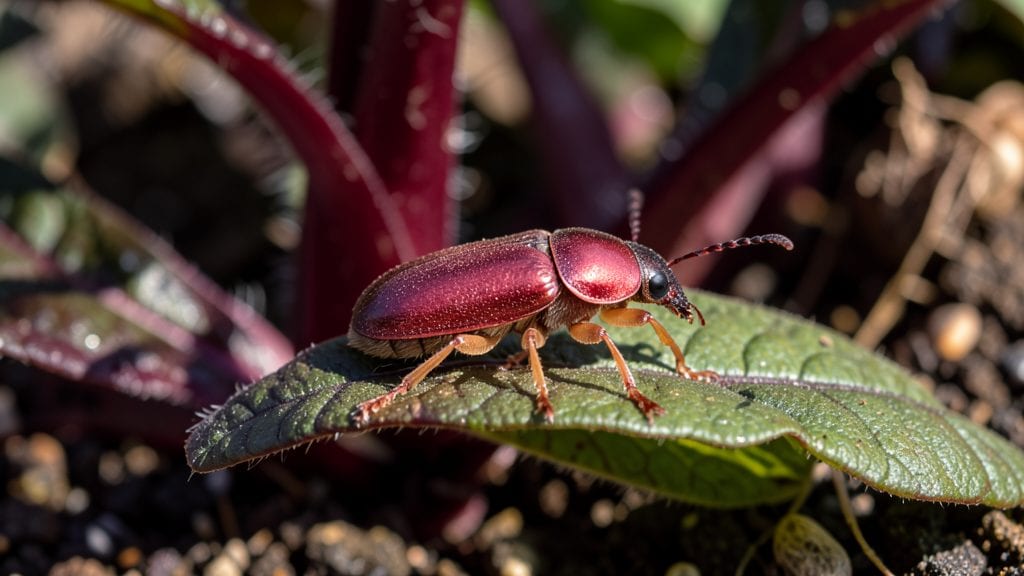
My garden’s red beetle problem vanished in two weeks—no more skeletonized leaves or chewed stems. These tiny invaders (about ⅛-inch long) look like armored soldiers with their bright red shells, but they’re actually the last thing you want marching through your veggies.
I’ll show you how to spot their damage early, what plants they target most, and the foolproof organic methods that actually work.
The first sign? Tiny holes in leaves or stems that look like they were made by a drill bit. They love squash, beans, and tomatoes, but even herbs aren’t safe. The good news? You don’t need harsh chemicals.
A mix of neem oil sprays, row covers, and beneficial nematodes (tiny soil-dwelling predators) can wipe them out faster than you’d think. I’ve tested all three—here’s which one worked best for my heavy infestation last summer.
By the end of this, you’ll have a garden where red beetles stand zero chance. Your plants will stay lush, your harvest will stay intact, and you’ll skip the panic of finding another chewed leaf.
The key is acting fast—once they’re gone, they’re gone for good. Let’s get your veggies back to thriving.
Works for home gardens, raised beds, and even container setups. Whether you’re dealing with a first-time outbreak or a recurring battle, these steps adapt to any scale. No more beetle drama—just healthy plants and peace of mind.
Root Causes of Beetle Infestations
If your garden is suddenly overrun by red beetles—whether they’re Colorado potato beetles, Japanese beetles, or other destructive species—understanding the why behind their arrival is half the battle. These pests don’t just appear out of nowhere; they’re drawn by specific conditions in your garden.
Below, we break down the most common triggers and how they create the perfect beetle buffet.
Beetles, especially Colorado potato beetles, target weak or overcrowded plants because they’re easier to feed on and reproduce in. When plants are stressed—due to poor spacing, nutrient deficiencies, or disease—they release chemical signals that attract pests.
- Why it happens: Healthy plants have stronger defenses (like thicker leaves or bitter compounds), but stressed plants become low-hanging fruit. Beetles also lay eggs in soil near struggling plants, ensuring their larvae have an easy meal.
- Actionable fix:
- Space plants properly (follow seed packet guidelines for airflow).
- Test soil pH and amend with compost to boost plant vigor.
- Remove diseased or dying foliage immediately to break the cycle.
Not all beetles eat everything—most have a menu. For example, Japanese beetles love roses, grapes, and beans, while Mexican bean beetles zero in on legumes. If your garden is a beetle’s dream salad bar, they’ll move in permanently.
| Beetle Type | Target Plants | Why They Choose Them |
|---|---|---|
| Colorado Potato Beetle | Potatoes, tomatoes, eggplants, peppers | These nightshades contain solanine, which beetles can detoxify but humans can’t. |
| Japanese Beetle | Roses, grapes, beans, raspberries | They’re drawn to floral scents and soft, juicy leaves. |
| Mexican Bean Beetle | Green beans, soybeans, clover | They lay eggs on the undersides of leaves, ensuring larvae hatch into a pre-made food source. |
Actionable fix:
- Rotate crops yearly to disrupt beetle life cycles.
- Plant repellent companions like marigolds, basil, or catnip near vulnerable plants.
- Remove or replace heavily infested plants (especially nightshades) to starve out beetles.
Beetles thrive in warm, humid environments with plenty of hiding spots. A garden with dense foliage, mulch piles, or rocky crevices provides the perfect breeding ground. Even a single sunny, sheltered corner can become a beetle hotspot.
- Why it happens: Beetles are cold-blooded and rely on external heat to survive. Adults seek out warm areas to feed and lay eggs, while larvae burrow into soil or mulch to avoid predators and dry conditions.
- Actionable fix:
- Reduce mulch thickness near high-risk plants (keep it to 2–3 inches).
- Prune dense shrubs to improve airflow and sunlight penetration.
- Use reflective mulch (like silver plastic) to deter beetles with light.
Many beetle infestations start small—tiny. Female beetles lay eggs in soil, on leaf undersides, or in cracks in bark. If you miss these early signs, you’ll soon have an explosion of larvae (like grubs or whiteflies) devouring your garden.
- Why it happens: Eggs are often laid in batches of 20–50, and they hatch in as little as 3–10 days under ideal conditions. By the time you spot chewed leaves, the damage is already done.
- Actionable fix:
- Inspect leaf undersides and stem crevices weekly for clusters of tiny eggs (they look like tiny footballs or ovals).
- Handpick eggs and drop them into soapy water.
- Apply kaolin clay or neem oil to disrupt egg viability.
In a balanced ecosystem, beetles face predators like birds, parasitic wasps, and ground beetles. But if your garden lacks biodiversity—whether due to pesticides, monoculture planting, or habitat loss—beetles multiply unchecked.
- Why it happens: Broad-spectrum pesticides kill beneficial insects along with pests, leaving beetles with no competition. Monoculture gardens (e.g., rows of identical tomato plants) also attract beetles in swarms.
- Actionable fix:
- Plant native wildflowers to attract predatory insects like ladybugs and lacewings.
- Avoid chemical pesticides; opt for targeted sprays (e.g., pyrethrin for adults only).
- Install birdhouses or bat boxes to encourage natural pest control.
💡 Pro Tip: Combine these fixes for maximum impact. For example, pruning for airflow (to reduce shelter) + planting repellents (to mask host plant scents) + introducing predators (to disrupt the food chain) creates a multi-layered defense that beetles can’t crack.
Quick Fixes for Garden Pests
Now that you know why those pesky red beetles and other critters invade your garden, let’s tackle the solutions—fast and effectively! Below, we’ve mapped common causes to practical fixes, so you can reclaim your veggie haven in no time.
Problem: Dense foliage hides pests, traps moisture, and stresses plants—perfect conditions for beetles and aphids to thrive.
Fix:
- 🍃 Prune strategically: Snip back overgrown branches or leaves to improve airflow. Focus on the lower canopy where pests love to hide.
- 🌱 Space plants properly: Follow seed packet guidelines for spacing. For example, tomatoes need 18–24 inches between plants, while carrots should have 2–3 inches of space.
- 🌿 Rotate crops: Avoid planting the same veggies in the same spot yearly. Beetles target familiar favorites like lettuce, spinach, and radishes.
Prevention Tip: 💡 Mulch lightly (1–2 inches) with straw or grass clippings to deter beetles while keeping soil moist—just avoid piling mulch against stems to prevent rot.
Problem: Underwatered, nutrient-deficient, or diseased plants attract pests like a buffet.
Fix:
- 💧 Water deeply but less often: Aim for 1–1.5 inches of water per week (check soil moisture—top inch should be dry). Early morning watering prevents fungal issues that weaken plants.
- 🌱 Feed the soil: Use compost or a balanced organic fertilizer (like 5-5-5) every 4–6 weeks. For quick fixes, try a fish emulsion or kelp meal to boost immunity.
- 🚫 Remove diseased leaves: Yellowing or spotted leaves? Snip them off and dispose of them in the trash (not compost). Pests feast on weak spots!
Prevention Tip: ✨ Interplant with pest-repelling herbs like basil, thyme, or marigolds. These act as natural bodyguards for your veggies!
Problem: You’ve spotted red beetles munching on your lettuce or chewing holes in leaves.
Fix:
- 🔪 Handpick aggressively: Early morning is best—beetles are sluggish and easy to spot. Drop them into soapy water (1 tbsp dish soap per gallon) to kill them instantly.
- 🕷️ Introduce predator allies: Ladybugs, lacewings, and ground beetles love red beetles. Buy them online or attract them with dill, fennel, or cosmos flowers.
- 🛡️ Use row covers: Lightweight fabric covers (like floating row covers) block beetles while letting sunlight and water through. Secure edges with soil or rocks.
Prevention Tip: 🎯 Set up yellow sticky traps near infested areas. Beetles are drawn to yellow and will get trapped—just refresh traps weekly.
Problem: You’ve dealt with the current outbreak, but you’re worried about next season.
Fix:
- 🌱 Plant trap crops: Sacrifice a few rows of radishes or mustard greens to lure beetles away from your prized veggies. Once infested, remove and destroy the trap plants.
- 🌿 Rotate planting times: Stagger sowing dates for crops like lettuce and spinach. Beetles target young, tender leaves—so if you plant in waves, they’ll never catch up!
- 🌡️ Time your harvests: Beat the beetles by harvesting crops before they peak. For example, pick radishes in 20–30 days instead of waiting for full size.
Prevention Tip: 🔥 Freeze or solarize soil in late summer. Lay clear plastic over garden beds for 4–6 weeks to bake out pests and eggs. Or, till in cardboard + compost to smother overwintering beetles.
Need a cheat sheet? Here’s a snapshot of fixes by problem:
| Issue | Immediate Fix | Prevention Tip |
|---|---|---|
| Overcrowding | Prune + space plants | Mulch lightly, rotate crops |
| Weak/stressed plants | Water deeply + fertilize | Plant companion herbs |
| Active beetle infestation | Handpick + row covers | Use yellow traps + predator insects |
| Recurring pests | Trap crops + staggered planting | Solarize soil or freeze overwintering eggs |
Remember: Consistency is key! Combine one immediate fix (like handpicking) with one preventive step (like companion planting) for a pest-free garden in weeks. Your veggies will thank you—no red beetle buffet allowed! 🚫🐞
Frequently asked questions
What do red beetles look like, and how can I tell if they're damaging my garden?
Red beetles like the Colorado potato beetle or Mexican bean beetle are about ⅛-inch long with a bright red-orange shell and black stripes or spots. Look for chewed leaves with jagged edges or tiny holes—these are their calling cards. Check the undersides of leaves for clusters of yellow eggs or white grubs in the soil.
Are there plants that naturally repel red beetles?
Plant marigolds, basil, thyme, or catnip near vulnerable crops like tomatoes or beans. These act as natural deterrents by masking plant scents beetles love. Dill, fennel, and cosmos also attract beneficial predators like ladybugs and lacewings that hunt beetles.
Can I use homemade sprays to get rid of red beetles?
Yes! Mix 1 tablespoon dish soap + 1 quart water for a quick knockdown spray, or use neem oil (2 teaspoons per quart of water + a drop of soap). Spray early morning or evening to avoid harming bees. Reapply every 3–5 days until beetles disappear. For larvae, try kaolin clay (food-grade clay mixed with water).
Will row covers work for red beetles, and how do I use them?
Row covers are highly effective! Use lightweight fabric (like floating row covers) over plants to block beetles while allowing sunlight and water. Secure edges with soil or rocks. Remove covers when plants flower to allow pollination. Works best for tomatoes, beans, and squash—just check covers weekly for tears.
What's the best time of day to handpick red beetles?
Early morning is ideal—beetles are sluggish after overnight cooling. Wear gloves and drop them into soapy water (1 tbsp dish soap per gallon) to kill them instantly. Focus on leaf undersides and stems where they hide. Repeat daily until no more beetles appear. For large infestations, combine handpicking with yellow sticky traps.