
Tools
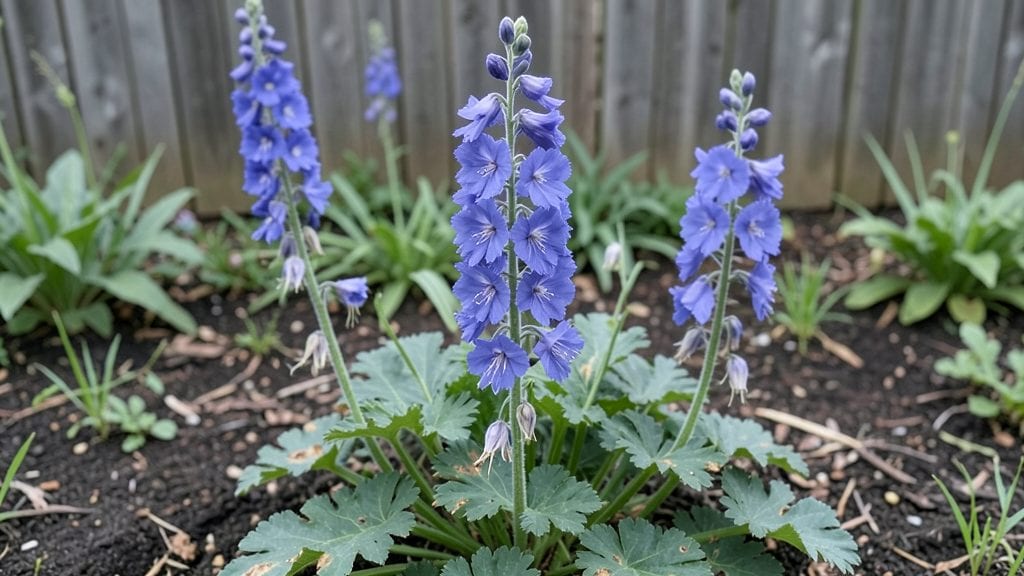
Delphiniums in your garden aren't just plants—they're living sculptures that turn ordinary spaces into breathtaking displays. 🌿 I remember the first time I saw them in a cottage garden, their spiky blue plumes reaching toward the sky like nature's own chandeliers.
These towering blooms do more than impress; they anchor your design, drawing the eye upward and creating vertical drama where flat borders fall short.
The secret to making them work isn't complicated—it's about placement and pairing. Group them in odd-numbered clusters (threes or fives) where their height can shine, like near patios or along pathways where their blooms will catch the light at every angle.
Pair them with shorter perennials like salvias or nepeta to create a layered effect that feels intentional, not random. The key is letting them take center stage while surrounding them with plants that won't compete for attention.
You'll end up with a garden that feels like a living painting—jewel-toned spikes of blue, purple, or white against lush green foliage, all framed by seasonal companions that change with the months.
Delphiniums bloom in late spring to early summer, so time their planting with early-season bulbs like alliums or tulips for a continuous show. The result? A space that feels both elegant and effortlessly natural, with blooms that turn heads from a distance.
Works equally well in cottage gardens, modern landscapes, or even container arrangements on patios. The possibilities are endless once you see how these dramatic plants can transform your outdoor space—here's how to make them the star of your design.
📚 In This Guide
- What you need
- Instructions
- Tips and common mistakes
- Wrapping up and next steps
What you need
- ● Delphinium Plants: 10–20 Delphinium elatum or Delphinium grandiflorum plants (for a full border or focal point)
- ● Choose tall varieties (4–6 ft) for drama or dwarf types (2–3 ft) for borders
- ● Soil Amendments: 5–10 lbs well-draining potting mix (or garden soil + perlite for heavy clay)
- ● 2–3 cups bone meal or composted manure (per plant) for phosphorus-rich soil
- ● 1 tbsp lime (if soil is acidic) to raise pH to 6.5–7.5
- ● Planting Supplies: Garden trowel or bulb planter (for delicate roots)
- ● Stakes or floral supports (5–6 ft tall) (1 per plant)
- ● Organic mulch (e.g., wood chips or straw, 2–3 inches thick)
- ● Watering Tools: Watering can or drip irrigation hose (avoid overhead watering to prevent mildew)
- ● Color Coordination: Pair with Lupinus (lupines) or Rudbeckia for complementary heights and hues
- ● Container Gardening: Large fabric grow bags (18+ inches deep) for urban spaces
- ● Fertilizers: Balanced liquid fertilizer (10-10-10) for mid-season feeding
- ● Epsom salt (1 tbsp per gallon of water) to boost magnesium
- ● Pest Control: Neem oil spray or row covers for aphid-prone varieties
- ● Decorative Touches: Garden flags or markers to label varieties (if testing multiple types!)
How to plant and design delphiniums for stunning height and impact
These striking perennials thrive with the right placement and care—here's my foolproof approach.
🌱 Step 1: Choose the Perfect Planting Location
Delphiniums need full sun—at least 6 hours daily—to reach their full dramatic height. I always pick the sunniest, most protected spot in my garden because their tall spikes need support from wind and rain. Avoid low-lying areas where cold air collects, as delphiniums dislike soggy roots.
Test your spot by observing how sunlight moves across the garden over a week. The ideal location gets morning sun and afternoon shade in hot climates, preventing the flowers from scorching. Amend the soil with 2-3 inches of compost before planting to improve drainage and fertility—delphiniums hate sitting in wet soil.
🪴 Step 2: Plant Crowns at the Right Depth
Dig holes 12-18 inches apart (closer for dwarf varieties) and 2 inches deeper than the root ball. The crown—the thickened base where roots meet stems—should sit just ½ inch below soil level. Planting too deep causes rot; too shallow and stems flop.
Gently tease out crowded roots to encourage spreading. Mix a handful of bone meal into the backfill soil for phosphorus, which strengthens roots and blooms. Water deeply right after planting to settle the soil and eliminate air pockets around the roots.
☀️ Step 3: Support Stems Early to Prevent Flopping
Delphiniums grow 4-6 feet tall, so install 4-5 foot stakes or rings> at planting time. I use bamboo stakes tied with soft twine to avoid damaging stems. Avoid metal supports, which can heat up in sun and burn tender foliage.
Tie stems loosely to the support as they grow—never too tight, or you’ll restrict growth. Watch for the first 3-4 sets of true leaves> before tying; this ensures sturdy stems. Mulch with 2-3 inches of organic mulch> to retain moisture and suppress weeds, but keep it 6 inches away from stems> to prevent rot.
💧 Step 4: Water and Fertilize for Maximum Blooms
Water deeply once weekly> during the first growing season, soaking the soil to 12 inches deep. Delphiniums develop deep taproots, so consistent moisture encourages strong growth. Avoid overhead watering, which can spread fungal diseases like powdery mildew—water at the base instead.
Feed with a balanced fertilizer (10-10-10)> at planting, then again in early spring. Switch to a low-phosphorus, high-potassium fertilizer (5-10-10)> when buds form to promote blooming. Stop fertilizing 6-8 weeks before first frost> to harden off plants for winter.
✂️ Step 5: Deadhead and Prune for Next Year’s Growth
Cut back faded flower spikes to 6 inches above the ground> after blooming to redirect energy to next year’s growth. I always wear gloves—delphinium foliage can irritate sensitive skin. Leave the basal leaves intact; they photosynthesize and store energy for spring.
In late fall, cut back stems to 2-3 inches above the ground> and apply a 3-inch layer of mulch> to insulate roots. Delphiniums are hardy in zones 3-8, but young plants benefit from winter protection. Mark planting locations to avoid disturbing roots when spring arrives.
Tips & tricks for perfect delphinium planting
Between us, I've planted these towering beauties enough times to know the little details that make all the difference. Here's what nobody tells you about getting those dramatic delphinium spikes to thrive.
Sunlight Strategy: That 6 hours of full sun isn't just a suggestion—it's non-negotiable for maximum height and bloom. I've learned the hard way that even partial shade can make your delphiniums grow leggy and weak. If your garden doesn't get full sun, consider planting them in a raised bed where they'll get more direct sunlight. Trust me on this: the difference between 3-foot and 6-foot spikes comes down to sunlight exposure.
Root Ball Revelation: When planting those crowns, don't just eyeball the depth—measure it. The crown should sit just ½ inch below soil level, no more, no less. I've seen gardeners plant too deep and watch their delphiniums rot from the bottom up. Use a ruler or measuring stick to verify placement. Also, that bone meal isn't optional—it's what gives your plants the phosphorus boost they need for strong roots and abundant blooms.
Support System Secret: Install those 4-5 foot stakes or rings at planting time, not after the plants are already flopping. I use bamboo stakes because they're gentle on stems and won't heat up like metal in the sun. Pro tip: Bury the stakes 6 inches deep in the ground for maximum stability. And here's what nobody tells you—when tying stems, use soft twine and tie in a figure-eight pattern to prevent stem damage as they grow.
Watering Wisdom: That once weekly deep watering to 12 inches deep is crucial because delphiniums develop deep taproots. I've seen many gardeners overwater and create soggy conditions that lead to root rot. Use a moisture meter to check soil moisture—if it's dry at 12 inches, it's time to water. And always water at the base, never overhead, to prevent fungal diseases like powdery mildew that can ruin your blooms.
Pro Tips for Delphinium In Garden
- Between us, I've planted these towering beauties enough times to know the little details that make all the difference.
- Sunlight Strategy: That 6 hours of full sun isn't just a suggestion—it's non-negotiable for maximum height and bloom.
- Root Ball Revelation: When planting those crowns, don't just eyeball the depth—measure it.
Frequently asked questions
Got questions about growing delphiniums in your garden? You’re not alone!
Here are some of the most common queries—and their answers—to help you cultivate stunning, drama-worthy blooms with confidence.
How do I keep my delphiniums from flopping over in windy conditions?
Delphiniums are tall and elegant, but their stems can bow under strong winds. Stake them early—use tall garden stakes or peony rings tied loosely with soft twine to avoid damaging the stems. For extra support, plant them near a sheltered wall or fence or cluster them in groups to create natural windbreaks. Deadhead spent blooms to encourage more flowers and reduce top-heavy weight.
When is the best time to plant delphiniums for continuous blooms?
For long-lasting color, plant delphiniums in early spring or late summer. Spring-planted varieties (like Delphinium elatum) often bloom in their first year, while fall plantings establish roots for robust spring blooms. Hardy to USDA zones 3-9, they thrive in cool climates but may need afternoon shade in hotter regions. Pro tip: Soak roots in water for 1-2 hours before planting to reduce transplant shock!
What pests or diseases should I watch out for with delphiniums?
Delphiniums are generally low-maintenance, but keep an eye out for:
- Slugs & Snails: These pests love young shoots. Use organic slug bait or beer traps for prevention.
- Powdery Mildew: A fungal issue in humid climates. Improve airflow by spacing plants 18–24 inches apart and water at the base to avoid wetting foliage.
- Japanese Beetles: They chew leaves! Handpick them or use neem oil as a natural deterrent.
Rotate crops every few years to prevent soil-borne diseases from building up.
Can I grow delphiniums in containers, or are they strictly for gardens?
Dwarf varieties (like ‘Pacific Giant’ or ‘Black Night’) thrive in large containers (12+ inches deep) with well-draining soil. Use a heavy pot to prevent tipping and place it in a partially shaded spot. Fertilize monthly with a balanced formula (10-10-10) and water consistently—containers dry out faster than garden beds. Bonus: Container delphiniums are perfect for patios or small spaces!
What are some low-maintenance alternatives if delphiniums seem too high-maintenance?
If delphiniums require more care than you’d like, try these equally dramatic but easier-to-grow perennials:
- Lupines: Drought-tolerant, nitrogen-fixing, and come in vibrant blues/purples.
- Hollyhocks: Tall, old-fashioned blooms with fewer pest issues (though they may need staking too!).
- Foxgloves: Biennial but self-seeds easily; thrives in partial shade.
- Russian Sage: Drought-resistant, silvery foliage, and attracts pollinators.
Each offers height and texture without the same fuss!
Wrapping up and next steps
Adding delphinium in garden designs is like inviting a burst of vertical elegance into your outdoor space—these towering blooms bring drama, color, and effortless sophistication. Whether you’re a seasoned gardener or just starting, their versatility makes them a must-have for any landscape.
Now that you’re armed with tips on planting, care, and styling, why not take the plunge? Grab your gloves, sketch a bold design, and let your garden tell its own story with these stunning stars. 🌸✨