Tools
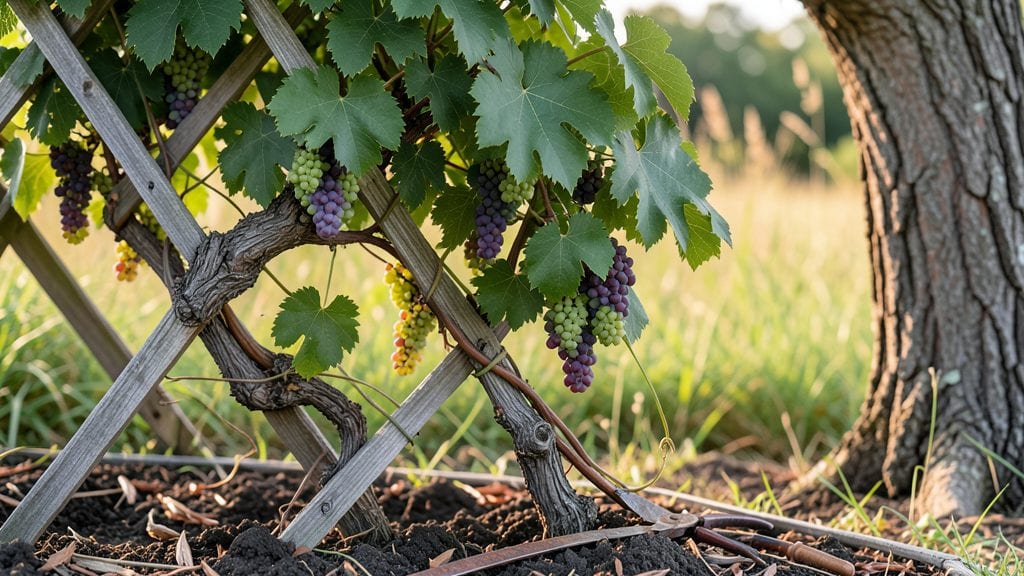
Growing garden grape vines transforms a shady corner into a sun-drenched treasure trove of sweet, juicy fruit. 🌿 I learned the hard way that the right trellis isn't just about looks—it's the backbone of a productive vine.
My first attempt with a flimsy wire frame left me with tangled canes and poor air circulation, but once I upgraded to a sturdy T-post system, the difference was night and day.
The secret starts with full sun exposure and well-draining soil—grape vines are high-maintenance divas that reward you with 5-10 pounds of fruit per vine when happy.
You'll need a 12-15 foot trellis for most varieties, and pruning in late winter (before buds swell) keeps the plant focused on fruit, not wild growth. The first harvest? Worth every minute of training those canes.
By summer, you'll be harvesting clusters of grapes that taste like childhood memories—sweet, sun-ripened perfection. The trellis doesn't just support the vine; it turns grape growing into a low-stress, high-reward project.
No more wrestling with sprawling vines or losing fruit to rot—just a structured system that works with nature, not against it.
Works for Concord, Niagara, or Thompson Seedless varieties, and adapts to containers if space is tight. Here's how to set up a system that actually produces fruit—not just foliage.
📚 In This Guide
- What you need
- Instructions
- Tips and common mistakes
- Wrapping up and next steps
What you need
- ● Grapevine plants: Choose disease-resistant varieties like Concord, Thompson Seedless, or Cabernet Sauvignon. Buy 1-3 healthy, bare-root or potted vines from a reputable nursery.
- ● Trellis or support structure: A sturdy 5-6 ft tall trellis (wooden, metal, or PVC) or a strong arbor to support the vine’s weight (3-5 ft wide for spacing).
- ● Well-draining soil: Amend heavy clay or sandy soil with compost (2-3 inches) or aged manure to improve fertility and drainage.
- ● Pruning tools: Sharp pruning shears (for small branches)
- ● Loppers (for thicker stems)
- ○ Pruning saw (optional, for stubborn wood)
- ● Mulch: Organic mulch like straw or wood chips (2-3 inches) to retain moisture and suppress weeds.
- ● Drip irrigation or soaker hose: Grapevines need 1-2 inches of water weekly (adjust for climate).
- ● Soil pH test kit: Grapevines prefer pH 6.0-7.0. Adjust with lime (to raise pH) or sulfur (to lower it) if needed.
- ● Fertilizer: Balanced 10-10-10 or 5-10-10 fertilizer (apply sparingly in early spring).
- ● Grapevine ties: Soft jute or plastic twine to secure vines to the trellis without damaging stems.
- ● Fungicide (organic or chemical): For prevention of powdery mildew or black rot (especially in humid climates).
- ● Gloves and long sleeves: Protect yourself from thorns and harsh weather while working.
Step-by-step instructions for planting and training garden grape vines
Here’s the method I’ve perfected over years of growing robust, fruit-heavy grape vines—no fancy equipment, just smart training.
🌱 Step 1: Choose the Right Location and Prepare the Soil
Garden grapes thrive in full sun—select a spot that receives at least 6-8 hours of direct sunlight daily. I always test the soil first by digging a 12-inch hole and checking for good drainage. If water pools after 30 minutes, amend the soil with 3-4 inches of compost mixed into the top 12 inches of earth. Grapes hate soggy roots, so if your soil is heavy clay, build a 6-inch raised mound to improve drainage.
Spread the 1 cup of bone meal (for phosphorus) and 1 cup of greensand (for potassium) evenly in the planting hole. These nutrients encourage strong root development and fruit production. Work them into the soil at the bottom of the hole, then add a 2-inch layer of coarse sand if your soil is dense. This creates a root-friendly zone right where the vine’s roots will settle.
🪴 Step 2: Plant the Vine at the Correct Depth and Angle
Dig a hole twice as wide as the vine’s root ball but only deep enough to accommodate the roots without bending them. Grapes need to be planted at a 45-degree angle, which encourages the vine to spread horizontally along the trellis. Place the vine in the hole so the topmost bud (the one closest to the stem) sits 2-3 inches below the soil surface. This ensures the vine has enough energy to establish roots before sending out new growth.
Fill the hole with soil, pressing gently to remove air pockets but avoiding compaction. Water deeply until the soil is evenly moist to a depth of 12 inches. Mulch the base with 2-3 inches of straw or wood chips, keeping it 6 inches away from the stem to prevent rot. This retains moisture and regulates soil temperature—critical for young vines in hot climates.
☀️ Step 3: Install the Trellis and Train the Vine Early
Use the 4-foot tall trellis you’ve assembled, driving the posts 18-24 inches deep into the soil for stability. The trellis should be 3-4 feet away from the vine’s base to give it room to spread. I attach 3-4 horizontal wires (or sturdy branches) at 12-inch intervals, starting 12 inches above the ground. This creates a ladder-like structure for the vine to climb.
As soon as new shoots emerge in spring, select the strongest 2-3 canes and tie them to the bottom wire with soft plant ties. Prune all other shoots at the base to redirect the vine’s energy into these main leaders. By mid-summer, the vine should be trained to reach the top wire, but never let it climb higher than 5 feet—this keeps the fruit accessible and prevents overgrowth. Here’s the thing: if you wait too long to train, the vine will become unruly and hard to manage.
✂️ Step 4: Prune for Fruit Production and Winter Hardiness
In late winter or early spring (before buds swell), prune the vine to 2-3 main arms, each with 2-3 buds. Remove all weak, crossing, or inward-growing canes—these compete for energy and reduce fruit quality. I always leave 2-3 buds per spur (short fruiting branches) to ensure a good crop. Cut back to just above a bud that faces outward on the cane; this encourages even growth and sunlight penetration.
After harvest, prune again to remove any dead or diseased wood. Thin out excess foliage around the fruit clusters to improve air circulation and reduce humidity, which prevents fungal diseases like powdery mildew. In colder climates, mound 4-6 inches of soil or mulch around the base of the vine for winter protection. This simple step can mean the difference between a vine that survives and one that struggles to recover.
💧 Step 5: Water and Fertilize for Maximum Yield
Water deeply once a week during the first growing season, ensuring the soil is moist to a depth of 12 inches. Grapes are drought-tolerant once established, but young vines need consistent moisture to develop strong roots. I water at the base, avoiding the leaves to prevent fungal diseases. In hot, dry climates, increase watering to twice weekly during fruit development—stressed vines produce smaller, less flavorful grapes.
Fertilize in early spring with ½ cup of 10-10-10 fertilizer spread evenly around the vine’s drip line. Repeat in early summer after harvest, but reduce nitrogen in the second application to encourage fruiting over leafy growth. I also side-dress with 1 cup of compost in late summer to replenish organic matter. The key is balance: too much nitrogen leads to lush foliage but few grapes, while too little results in weak vines and poor yields.
Tips & tricks for perfect garden grape vine training
Here's what I've learned after years of growing thriving grape vines—these small details make all the difference between a struggling plant and a fruit-heavy climber.
The Sunlight Factor: That 6-8 hours of daily sunlight is non-negotiable, but here's the thing: morning sun is more important than afternoon. Position your vine to catch those first rays, which helps prevent heat stress during peak summer hours. I've noticed vines in full afternoon sun often develop sunburned leaves, even if they get enough total sunlight.
Soil Preparation Secret: When amending your 12-inch hole with 3-4 inches of compost, don't just dump it in—work it into the existing soil thoroughly. The key is creating a homogeneous mix where roots can easily penetrate. I've seen beginners leave pockets of pure compost that can actually burn tender grape roots. Think of it like mixing cake batter: you want even distribution.
Trellis Training Timing: Don't wait until summer to install your trellis! Set it up immediately after planting so the vine has something to climb from day one. The 45-degree angle planting creates the perfect foundation for trellis training. I've found vines trained early develop stronger canes and produce fruit sooner than those trained later in the season.
Pruning Precision: When pruning to 2-3 buds per spur in Step 4, always cut just above a bud that faces outward. This might seem like a small detail, but it dramatically improves sunlight exposure and air circulation. I've seen vines with inward-facing buds develop more fungal issues because the center stays too shaded and humid. Think of it like arranging furniture in a room—you want everything facing outward for maximum access.
Pro Tips for Garden Grape Vine
- Here's what I've learned after years of growing thriving grape vines—these small details make all the difference between a struggling plant and a fruit-heavy climber.
- The Sunlight Factor: That 6-8 hours of daily sunlight is non-negotiable, but here's the thing: morning sun is more important than afternoon.
- Soil Preparation Secret: When amending your 12-inch hole with 3-4 inches of compost, don't just dump it in—work it into the existing soil thoroughly.
Frequently asked questions
Got questions about growing your own garden grape vine? You're not alone!
Here are answers to the most common concerns—from pruning to pests and everything in between.
How long does it take for a grape vine to bear fruit?
A well-cared-for grape vine typically takes 2–3 years to produce its first harvest. Patience is key—focus on establishing strong roots and trellising early to encourage faster fruiting. Varieties like Concord or Thompson Seedless often fruit sooner than heirloom types.
When is the best time to prune grape vines?
Prune grape vines dormant season (late winter or early spring, before buds swell) for best results. Avoid pruning in fall—it can leave wounds vulnerable to disease. Use clean, sharp tools to cut back last year’s growth to 4–6 buds per cane, promoting airflow and fruit production.
What are the most common grape vine pests and how do I prevent them?
Watch for Japanese beetles, aphids, and grape leafhoppers. Prevent pests with:
- Neem oil sprays (early season)
- Row covers (for young vines)
- Removing weeds (they harbor pests)
- Introducing ladybugs or parasitic wasps (natural predators)
Can grape vines survive winter in cold climates?
Yes! Hardy varieties like Niagara or Catawba tolerate temps down to -20°F. Protect young vines with mulch (straw or leaves) and wrap trellises in burlap for insulation. In extreme zones, plant near a south-facing wall for extra warmth.
What’s the difference between seedless and seeded grapes?
Seedless grapes
(e.g., Thompson Seedless) are bred for convenience and sweetness, ideal for snacking or juicing. Seeded varieties (e.g., Concord) often have deeper flavors and richer colors, perfect for jams or wine. Seedless grapes require more care—choose disease-resistant types for easier growing!
Wrapping up and next steps
Growing your own garden grape vine is a rewarding journey that combines patience, creativity, and a touch of horticultural magic. 🌱 With the right trellis, sunlight, and care, you’ll soon enjoy sweet, homegrown grapes—whether for fresh snacking, jams, or sharing with neighbors.
The key? Start small, stay consistent, and don’t hesitate to experiment with varieties that thrive in your climate.
Ready to turn your backyard into a vineyard? Roll up your sleeves and plant that first cutting! Grab your trellis, pick a sunny spot, and let nature do the rest. Happy growing—your future grape harvest awaits! 🍇