
Tools
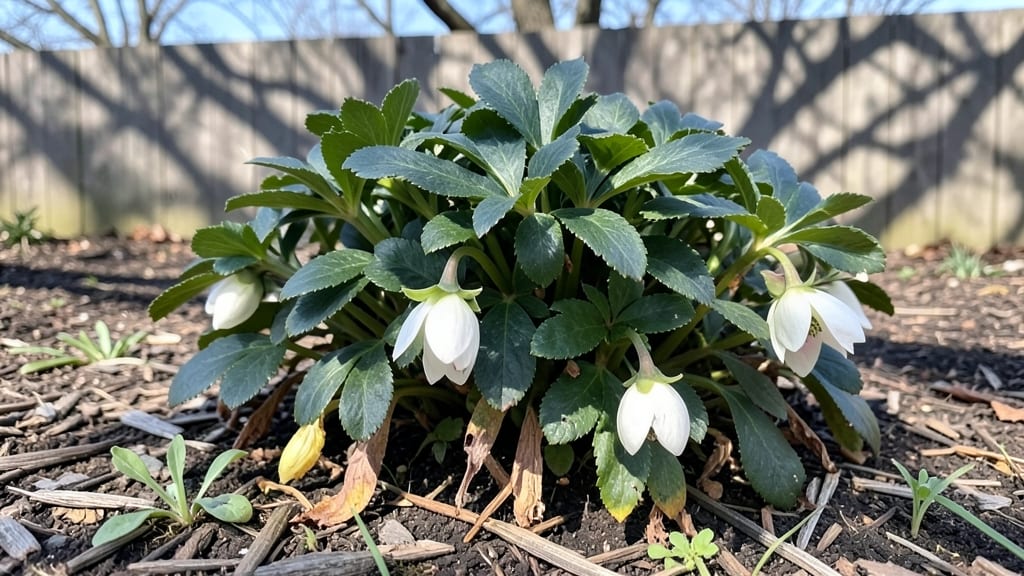
Hellebores in garden thrive as hardy, shade-tolerant perennials with striking winter-to-spring blooms, requiring minimal care once established in moist, well-draining soil. Their evergreen foliage and disease resistance make them ideal for woodland gardens, borders, and containers.
Hellebores are nature's understated superstars—they bloom when most gardens are still asleep, offering vibrant colors from late winter through spring. 🌸 Their secret? A combination of deep root systems that access moisture in shaded areas and thick, leathery leaves that conserve water.
Unlike many perennials, hellebores don't demand constant attention; once planted in the right spot, they'll reward you with years of effortless beauty while thriving where other plants might struggle.
What makes them particularly valuable is their adaptability. They handle everything from dense woodland shade to dappled sunlight, making them perfect for tricky garden spots. Plus, their unique nodding flowers protect delicate petals from frost damage, so you'll often see them blooming even in chilly conditions.
This resilience is why they're a favorite among gardeners who want low-maintenance yet high-impact plants.
💡 In This Article
- Why Hellebores Excel in Shady Gardens
- Planting and Caring for Hellebores Like a Pro
Why hellebores excel in shady gardens
Hellebores have mastered the art of low-light survival through their unique leaf structure and chlorophyll efficiency. Their deep green, leathery leaves contain a higher concentration of chlorophyll than many other perennials, allowing them to capture even 10-20% of available light—about half of what sun-loving plants need.
This adaptation lets them thrive in 30-70% shade, making them perfect for woodland gardens where sunlight barely reaches the forest floor. 🌿 The leaves also have a waxy coating that reduces water loss, helping them conserve moisture during dry spells.
Their slow growth rate is another key advantage—hellebores grow just 3-6 inches per year, allowing them to gradually build a robust root system that spreads 12-18 inches deep.
This deep network accesses moisture and nutrients from lower soil layers, giving them a competitive edge in shaded environments where surface roots might dry out. Unlike fast-growing plants that compete aggressively for resources, hellebores take their time, ensuring they can survive lean periods when other plants might fail.
Hellebores' cold hardiness (zones 4-9) is equally impressive, thanks to their ability to tolerate temperatures down to -25°F. Their nodding flower structure is a brilliant frost adaptation—petals hang downward, protecting delicate reproductive parts from ice damage while still allowing pollinators like early bees to access nectar.
The flowers often bloom in late winter or early spring, when most gardens are still dormant, making them one of nature's earliest pollinator magnets. 🐝 This timing also means they avoid late frosts that could damage more delicate blooms.
What's fascinating is how their evergreen foliage plays a dual role: it stays green year-round to continue photosynthesis when other plants are dormant, while also providing a lush backdrop that enhances their vibrant winter-to-spring blooms in shades of white, pink, purple, and green.
This combination of adaptations explains why hellebores don't just survive in shade—they thrive, often outlasting other perennials in the same conditions. Their disease resistance comes from this slow, steady growth pattern, which makes them less attractive to pests and fungal pathogens that target stressed plants.
Consider this comparison: While hostas (another shade plant) may struggle in full shade and require frequent division, hellebores maintain vigor for 10-15 years or more in the same spot with minimal intervention.
Their ability to self-seed moderately also means they'll gradually fill in bare areas over time, creating dense ground cover that suppresses weeds naturally. This makes them ideal for gardeners who want low-maintenance yet high-impact plants that deliver seasonal interest without constant upkeep.