
Tools
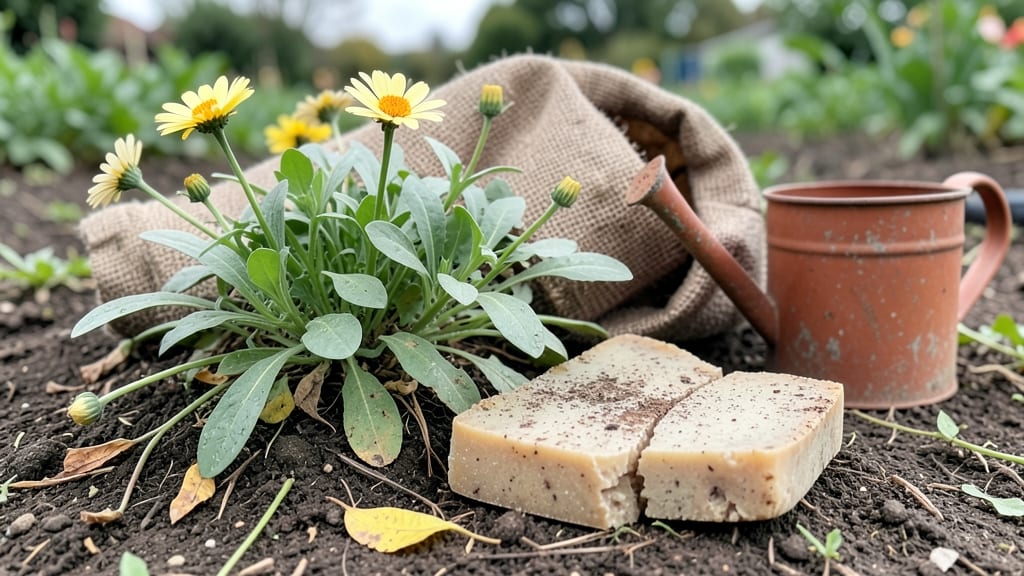
Using soap in the garden can control pests naturally and enhance soil health when prepared properly, but you must dilute it correctly and choose plant-safe formulas to prevent harm.
Soap disrupts pests by breaking down their protective waxy layers, which is why mild, biodegradable options like castile soap work best. 🔥 The key is using the right concentration—typically 1-2 tablespoons per gallon of water—and avoiding harsh detergents that can damage plant cells.
I’ve found that potassium-based soaps (like liquid castile) are gentler than sodium-based ones, making them ideal for both foliar sprays and soil amendments when used sparingly.
For soil health, a diluted soap solution can help activate compost by breaking down organic matter more efficiently, though it’s crucial to balance it with microbial-friendly amendments. Always test on a small plant area first, as some varieties (like succulents) are more sensitive to soap residues than others.
💡 In This Article
- How Soap Works Against Garden Pests
- Best Soap Solutions for Soil and Plant Care
How soap works against garden pests
Soap disrupts pests through a process called saponification, where its molecules break down the waxy, protective cuticle layer covering insects. This layer acts like a shield, preventing water loss and protecting against predators.
When soap molecules penetrate this barrier, they cause dehydration and cellular damage, effectively suffocating soft-bodied pests like aphids, mites, and whiteflies. The key lies in the soap's amphiphilic nature—its hydrophilic (water-attracting) and hydrophobic (water-repelling) ends work together to dissolve the insect's protective coating.
Not all soaps are equal in gardening. Potassium-based soaps, like liquid castile soap, are gentler and dissolve more easily in water, making them ideal for foliar sprays. They typically contain potassium hydroxide during saponification, resulting in a milder solution.
In contrast, sodium-based soaps (like many commercial detergents) are harsher and can leave residue that damages plant tissues. For example, a 1% solution of castile soap (about 1 tablespoon per gallon) is strong enough to kill pests but weak enough to avoid phytotoxicity in most plants.
The science behind soap's effectiveness involves its ability to lower surface tension of water, allowing it to spread more evenly across plant surfaces and penetrate pest exoskeletons. This is why a well-mixed spray covers pests more thoroughly than water alone.
However, the concentration matters—too much soap can clog plant stomata (pores) or create a film that blocks sunlight, stressing plants. I’ve seen firsthand how a 2% solution (about 2 tablespoons per gallon) can work wonders on aphid infestations within 24-48 hours, while higher concentrations risk leaf burn.
Mild soaps like castile are preferred because they’re biodegradable and break down quickly in the environment, minimizing harm to beneficial insects like ladybugs or bees.
The pH level also plays a role—most garden soaps have a near-neutral pH (around 7-8), which is less disruptive to plant physiology than acidic or alkaline solutions.
For instance, a pH of 6.5-7.5 is ideal for most garden plants, while commercial detergents often skew higher or lower, increasing the risk of damage.
What most gardeners don’t realize is that soap’s effectiveness varies by pest type. Soft-bodied insects (like aphids) are more susceptible because their exoskeletons are thinner and easier to penetrate. Harder-shelled pests (like beetles) require higher concentrations or repeated applications.
For example, a 3% soap solution might be needed for stubborn scale insects, but this should only be used as a last resort due to the higher risk of plant injury. Always spot-test on a small leaf area first!
For a deeper dive, consider the emulsifying properties of soap. When mixed with water, soap molecules form micelles—tiny spherical structures that trap oils and fats from the insect’s body. This process is similar to how dish soap removes grease from dishes, but on a microscopic scale targeting pest physiology.
The result? A pest control method that’s both non-toxic to humans and environmentally friendly when used responsibly.